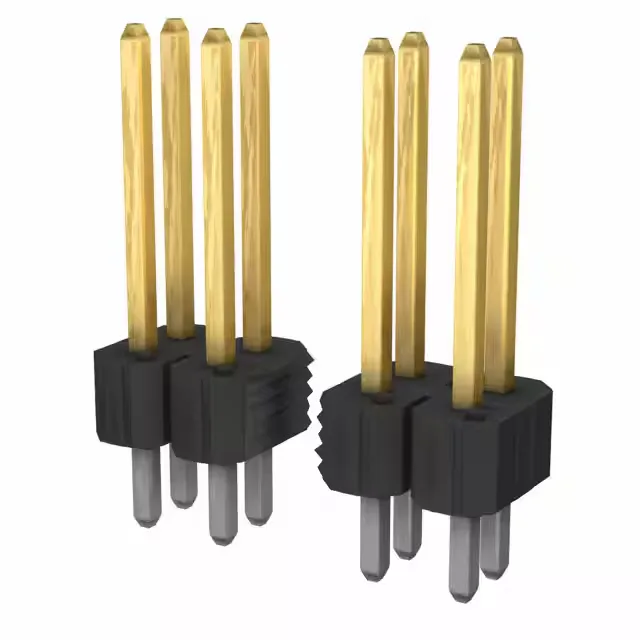
The Amphenol ICC 86837-134HLF is a 34-position, dual-row unshrouded header from the BERGSTIK II series. It uses the standard 0.100" (2.54 mm) pitch and row spacing, making it a drop-in fit for legacy through-hole PCB layouts and compatible with the broad installed base of 0.100" receptacles. The male square pins are gold or GXT-plated on the mating surface to 30.0 µin (0.76 µm), rated for repeated mating cycles in field-service or production-disconnect scenarios. Each contact carries 5 A at 110 V — suited for moderate signal and low-power distribution, not bus-level current. The black UL94 V-0 housing suits equipment inside an enclosure requiring a flame rating.
What the 5 A rating means in practice
5 A per circuit at 110 V is the headline rating, but the limiting factor in a dense dual-row header is the temperature rise across the full pin count. At 34 positions, drawing the full 5 A on every circuit simultaneously would exceed the housing's thermal budget — the rating assumes derating per the manufacturer's curve above ambient. For a typical signal or low-power application (0.5–2 A per circuit), the margin is generous. The 30.0 µ" gold or GXT plating on the mating surface supports hundreds of mating cycles without fretting corrosion, which matters more for the contact's long-term reliability than the raw current number.
Unshrouded design — what it means for your assembly
This is an unshrouded header, meaning there is no polarization ramp or shroud wall around the pins. The mating receptacle must provide its own keying, or the PCB layout must enforce orientation through footprint asymmetry or a separate alignment feature. The push-pull fastening relies on the friction of the pin-to-receptacle interface — no locking latch. For vibration-resistant or high-reliability harnesses, a shrouded header with a latch is preferred; for low-cost, high-density board-to-board or wire-to-board interconnects where the connector is not subjected to shock, the unshrouded form factor saves board space and cost.