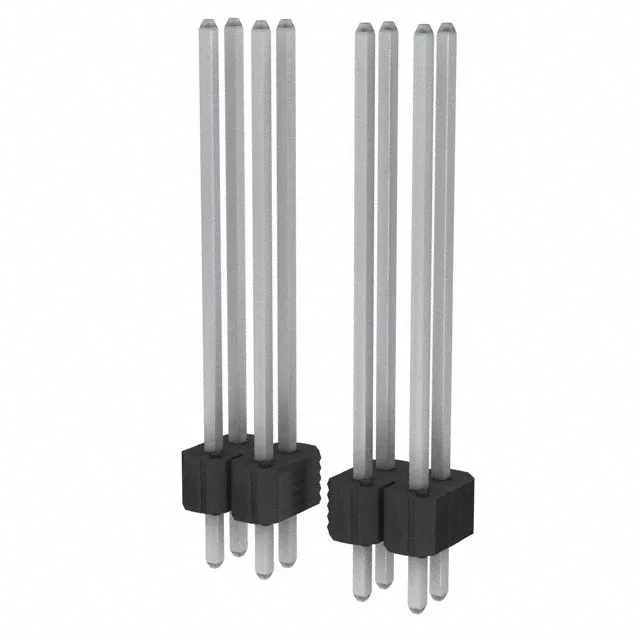
It uses the industry-standard 0.100" (2.54mm) pitch on both the pin-to-pin and row-to-row spacing, which means it drops into a standard 0.100" grid PCB footprint and mates with common 44-pin female receptacles, including IDC socket connectors for ribbon cable. It's a board-to-board or wire-to-board interconnect, typically found in backplane, peripheral I/O, and internal harness applications where a high pin count needs a reliable through-hole solder joint.
Rated 5 A per circuit, this header is a signal-grade interconnect. The 5 A ceiling is common for a 0.100" pitch unshrouded pin header; the real current limit in a dense 44-pin build will be set by the total bundle temperature rise, not the individual contact rating. The 100.0 µin (2.54 µm) tin plating on the mating surface is thicker than the 30-50 µ" found on many economy headers. That extra thickness buys more mating cycles before the tin wears through to the phosphor bronze base, which matters if the board sees repeated reconnections during test or field service. The post side is also tin-plated, matching the solderability of the through-hole termination.