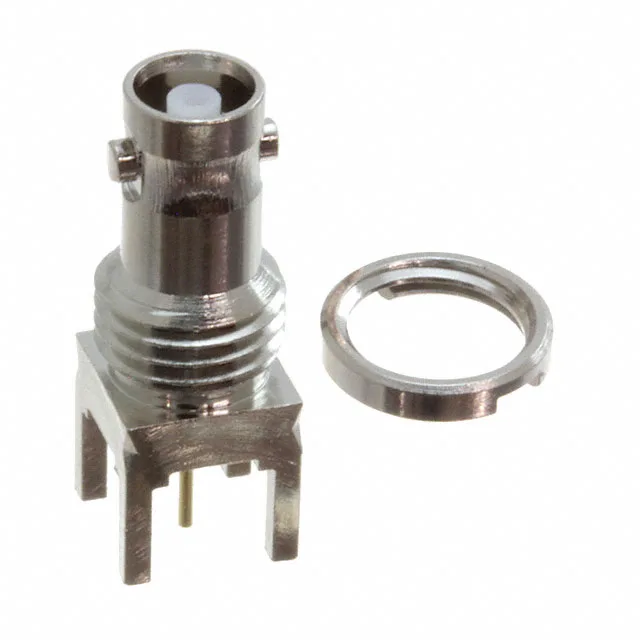
The HDBNC-J-P-GN-ST-BH1: The 75 Ohm impedance and 12 GHz frequency ceiling are the electrical specs that define its role — this is a video-grade connector, not a 50 Ohm RF/data BNC.
The 12 GHz maximum frequency is not a theoretical ceiling — it is the 3 dB roll-off point for the connector body and dielectric, and it directly confirms 12G-SDI compliance. At 12 Gbps serial data rates, the 75 Ohm characteristic impedance must hold through the bulkhead transition and the solder termination; the PTFE dielectric and the nickel-plated brass shell maintain that impedance across the band. The 330 V voltage rating is secondary in a video application — the signal levels are under 1 V — but it tells you the dielectric withstand is generous for any DC bias or fault condition.
The HDBNC-J-P-GN-ST-BH1 and the HDBNC-J-P-GN-ST-TH1 are both straight-body 75 Ohm BNC jacks with the same TRUE75™ HDBNC series pedigree, same 12G-SDI rating, same gold center contact, and same bayonet lock. The difference is the voltage rating: the BH1 is rated 330 V, while the TH1 is rated 500 V. For 12G-SDI video signals operating at sub-1 V levels, the 330 V rating is more than adequate — the higher 500 V rating on the TH1 matters only if the connector sits in a circuit with a DC bias or fault voltage that exceeds 330 V. The BH1 ships with a nut included; the TH1 ships without hardware. Both are active, both are panel-mount through-hole solder cup — the choice comes down to the voltage headroom your application requires and whether you need the mounting nut in the package.
No official second-source cross-reference is on record, but the TRUE75™ HDBNC series is a standard 75 Ohm BNC interface — any 75 Ohm BNC jack with a bayonet lock and solder cup termination will mate mechanically. The gold center contact and 12 GHz rating are the specs that separate this from a commodity BNC; confirm the BOM line calls for 12G-SDI-rated parts before substituting.