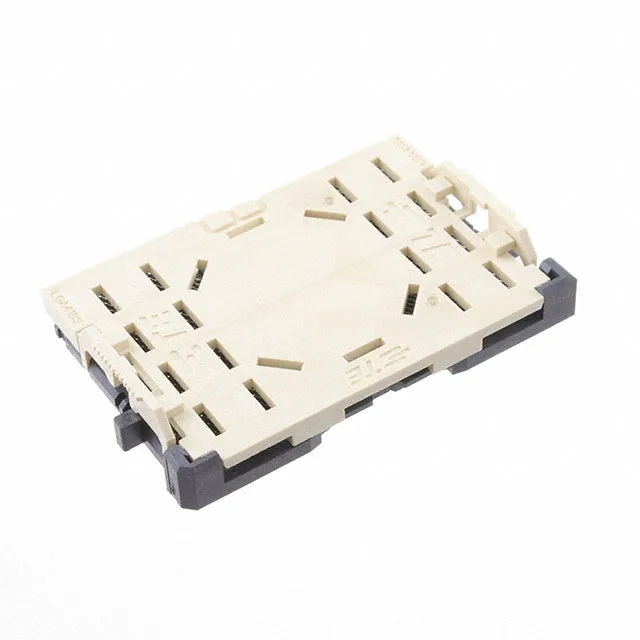
2-position RAST 5 header — what it carries and where it lands
The silver plating on both the mating tab and the solder post keeps contact resistance low and handles repeated mate cycles in a production environment — silver oxidises but the oxide is conductive, so it doesn't degrade the joint like tin oxide would in a low-voltage signal path. Through-hole solder termination gives a mechanical anchor that resists the cable strain from the wire harness — the 0.138" (3.50 mm) post length provides enough solder fillet for a reliable joint on a standard 1.6 mm PCB.
Glow wire compliance — why it matters for appliance buyers
This header carries a glow wire compliance feature, meaning it meets the IEC 60335-1 glow wire test for household appliances. The UL94 V-0 rated polyamide housing won't sustain a flame after the glow wire is removed — a requirement for equipment that sits inside an enclosure where a failed component could ignite nearby materials.
The key difference is pitch: 5.00 mm on this part versus 2.50 mm on the sibling — so the board footprint is wider, and the per-contact current ceiling is higher on the 5.00 mm version because the wider pitch allows more copper trace width between pads. Position count differs: 2 positions on this header versus 3 on the sibling — a straight BOM line decision for a 2-circuit versus 3-circuit harness.