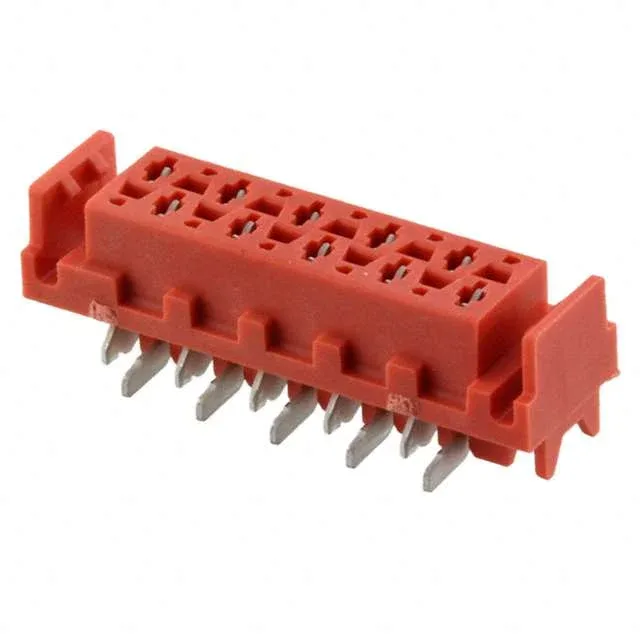
TE Connectivity AMP Connectors 1-338069-0 — Female Socket Headers

1-338069-0 TE Connectivity Micro-MaTch 10-Position

MPN1-338069-0
Active

TE Connectivity AMP Micro-MaTch, 1-338069-0, 10-position female socket header, 2.54 mm pitch, dual-row, SMD, tin-plated phosphor bronze contacts, friction lock, UL94 V-0, -40°C to 105°C.

$2.2600Ref. price · indicative, final on quote
RoHSROHS3 Compliant
SeriesMicro-MaTch
Sourced new & surplus through independent channelsAuthenticity-screened · ESD-safe packingListing updated Aug 2026

Specifications

1-338069-0 key specifications
ParameterValue
SeriesMicro-MaTch
TypeForked
MountingSurface Mount
Connector typeReceptacle
Fastening typeFriction Lock
Voltage rating100VDC
Operating temperature-40°C ~ 105°C
Contact materialPhosphor Bronze
Insulation colorRed
Insulation height0.209\" (5.30mm)
Insulation materialPolyamide (PA46), Nylon 4/6, Glass Filled
Material flammability ratingUL94 V-0

All specifications

1-338069-0 additional specifications
ParameterValue
StyleBoard to Board or Cable
PackageTape & Reel (TR) Cut Tape (CT)
TerminationSolder
ApplicationsAutomotive, General Purpose
Rows2
Pitch0.100\" (2.54mm)
Positions10
Row spacing - mating0.100\" (2.54mm)
Contact finish - postTin
Contact finish - matingTin

Product details

What this 10-position Micro-MaTch receptacle does in the assembly

The 1-338069-0: This is a 10-position, dual-row female socket header from the Micro-MaTch series, designed for board-to-board or cable applications. The 2.54 mm pitch matches standard 0.100-inch headers, and the SMD termination suits automated pick-and-place assembly. The friction lock holds the mating header in place under vibration — a practical detail when the assembly sees mechanical shock or cable tug. The tin-plated mating surface is adequate for moderate mating cycles; for high-cycle duty, a gold-plated sibling would be the better call.

Frequently asked questions

Does the 1-338069-0 have a locking mechanism?

Yes, it uses a friction lock to retain the mating header. This is a positive retention feature for vibration environments, but it is not a secondary latch or TPA — it relies on the interference fit between the receptacle and header.