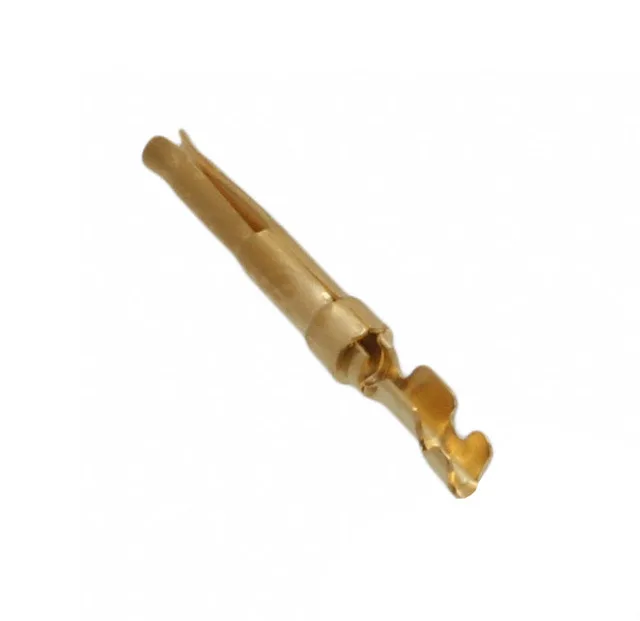
Why the Gold Flash Matters for Your Duty Cycle
Gold flash (a thin gold layer over the phosphor bronze base) is the standard finish for signal-level D-sub contacts. It prevents oxidation on the mating surface, so the contact resistance stays stable through dozens of insertion cycles — the right choice for a harness that gets reconnected during field service or bench testing. It is not a heavy-duty power contact; the stamped construction and flash plating are sized for signal circuits where the current per contact stays well under a few amps, consistent with the 24-28 AWG wire range.
Lifecycle Reality: This Contact Is Obsolete
That means the only channel for this part today is the surplus and independent-distribution market — date-coded reels or loose bulk from broker stock that was originally manufactured before the EOL date.
What Crosses to It When the Original Is Dry
The AMPLIMITE HDP-20 series uses the same stamped contact geometry across multiple order codes that differ only by plating thickness and finish. The 1-66505-1 is the next variant in the same series — same phosphor bronze base, same crimp barrel for 24-28 AWG, but with a heavier gold plating over the mating area rather than a flash. If your application requires the higher mating-cycle endurance of thicker gold, the 1-66505-1 is a direct mechanical fit in the same HDP-20 housing and uses the same crimp tooling. For a flash-only spec, the 1-66505-0 is what the drawing calls out, and the 1-66505-1 is the closest functional cross if you can accept the plating upgrade.