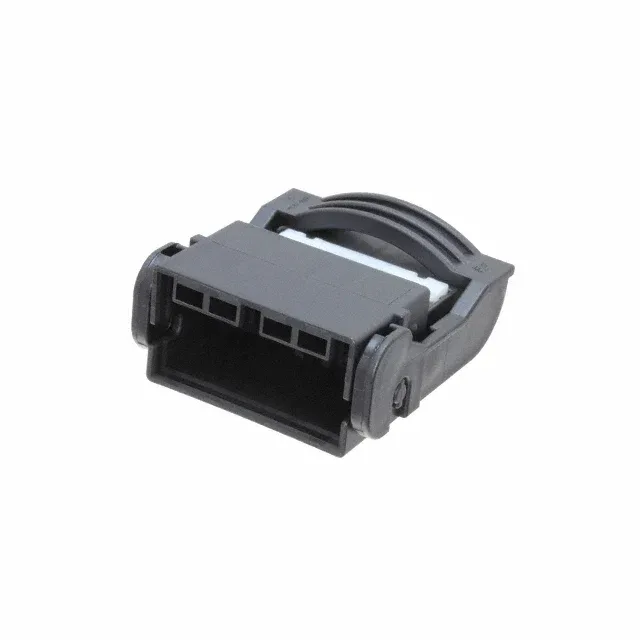
What This 22-Position Micro Quadlok Housing Is
It carries a lever lock for positive mating retention and comes as a cap cover assembly — the protective cover is integrated into the housing, not a separate boot. The housing accepts tab-style crimp contacts (sold separately) and is molded in black glass-filled PBT.
Why the Lever Lock Matters for Harness Reliability
A lever lock on a wire-to-wire housing provides a mechanical advantage during mating and a positive audible click that confirms full engagement. On a 22-position 3-row connector, the insertion force of all terminals adds up — the lever reduces the force the assembler applies and prevents partial mate that can cause intermittent contact in the field. This is a step up from a simple locking ramp; the lever lock is better suited to applications where vibration or thermal cycling could work a friction-only mate loose over time.
The Cap Cover Assembly — What It Changes
The cap (cover) feature on this housing means the protective cover is molded as part of the assembly, not a separate add-on. This simplifies inventory — one line item instead of a housing plus a separate cap — and ensures the cover is always present during handling and shipping. The cover protects the contact cavities from debris before the mating plug is inserted.
Contacts Are Not Included — What to Order Separately
The 1897540-2 ships as a housing assembly only.
The 1-2333134-5 is the same Micro Quadlok receptacle series but in a 30-position, 2-row configuration with a locking ramp instead of a lever lock. The 1897540-2 gives you 22 positions in 3 rows with the lever lock; the 1-2333134-5 gives you 30 positions in 2 rows with a ramp lock. The row count difference changes the housing width and the terminal cavity layout — the 3-row housing is taller but narrower, the 2-row is wider but shorter. The lever lock on the 1897540-2 provides a more positive mating engagement than the ramp lock on the 1-2333134-5.