The TE Connectivity 1903391-1 is a 2-position receptacle housing from the Grace Inertia 2.5 series, designed for wire-to-board or wire-to-wire applications where a positive latch keeps the pair mated under vibration. The 0.098" (2.50mm) pitch keeps the board footprint compact while leaving enough creepage for the voltage rating typical of this class. The housing is natural-colour glass-filled PBT, free-hanging (in-line), and accepts female socket crimp terminals — contacts are ordered separately.
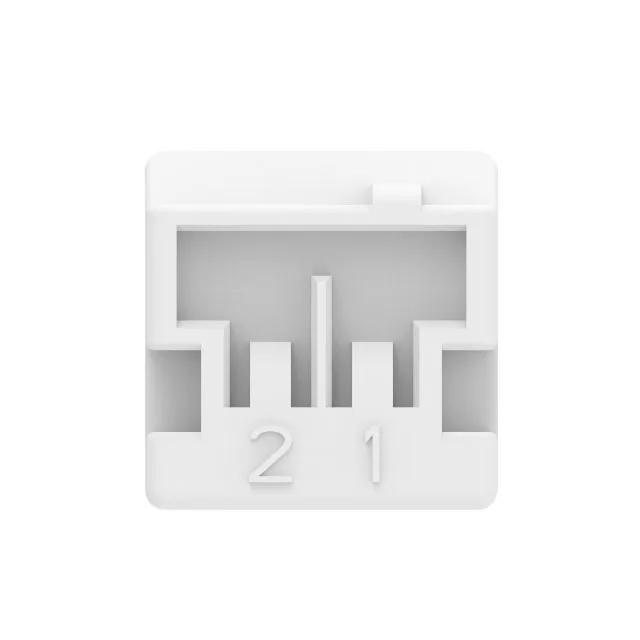
TE Connectivity 1903391-1 Grace Inertia 2.5 Receptacle
MPN 1903391-1
Active
TE Connectivity Grace Inertia 2.5 receptacle housing, 1903391-1, 2 positions, 1 row, 0.098" (2.50mm) pitch, natural, free-hanging, crimp termination, latch holder, -30°C to 105°C.
$0.2200
Ref. price · indicative, final on quote
Dispatch SLA24-48h Global Rush
Quality CheckOriginal Seal & Physical QC
RoHSRoHS Compliant
IncotermsDAP / DDP Available
SeriesGrace Inertia 2.5
Source DocumentedChannel stated on listing & quote
Condition PhotosReal unit photos / video on request
WhatsApp AnswersFast human replies for stock & sourcing questions
Worldwide DispatchDHL/FedEx — transit quoted per order
Independent supplier — new & surplus connector stock· Listing updated Aug 2026
Specifications
| Parameter | Value |
|---|---|
| Series | Grace Inertia 2.5 |
| Type | Female Socket |
| Mounting | Free Hanging (In-Line) |
| Connector type | Receptacle |
| Fastening type | Latch Holder |
| Operating temperature | -30°C ~ 105°C |
| Color | Natural |
| Insulation material | Polybutylene Terephthalate (PBT), Glass Filled |
| Pitch | 0.098\" (2.50mm) |
| Package | Bag |
| Rows | 1 |
| Contact termination | Crimp |
| Positions | 2 |
Product details
Frequently asked questions
What is the price of 1903391-1?
Buyers need cost for BOM sourcing and budget planning.
Is 1903391-1 in stock?
Availability determines whether the order can be fulfilled immediately.
What contacts are compatible with 1903391-1?
Designers and assemblers need matching crimp sockets for the housing.
What is the difference between 1903391-1 and other Grace Inertia housings?
Engineers compare parts to ensure correct fit and feature set.
What is the operating temperature range of 1903391-1?
Critical for applications with thermal constraints.
Is 1903391-1 RoHS and halogen free?
Compliance with environmental regulations affects sourcing decisions.
MPN
1903391-1