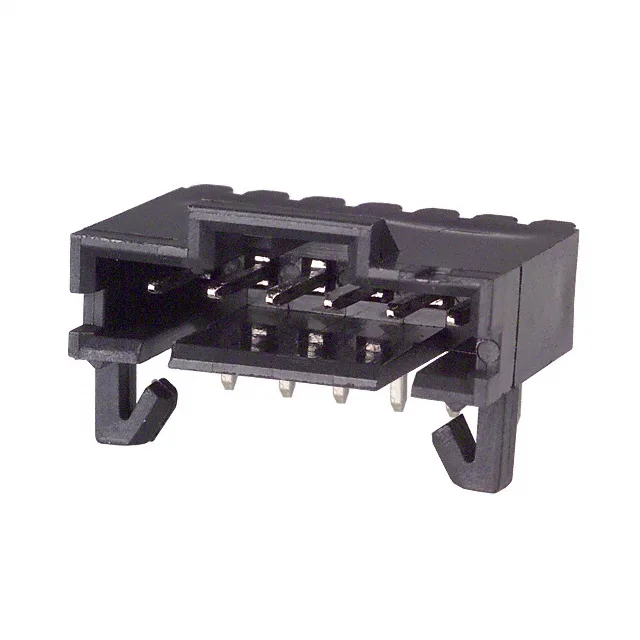
Board Fit and Routing — 6 Positions at 0.100" Pitch
The 2-103672-9: The 100.0 µinch (2.54 µm) tin thickness on the mating side is standard for moderate-cycle applications — expect several hundred mating cycles before contact resistance drifts, but not the thousands you would get from gold.
Shrouding, Latching, and Keying — Vibration Resistance in a Wire-to-Board Joint
The keying slot prevents cross-mating with a differently keyed receptacle, which is a practical safeguard when multiple similar connectors share a panel. The board lock is a pair of plastic or metal posts that snap into the PCB holes during through-hole insertion. During wave soldering, these hold the header flush against the board — without them, the solder joints would take the shear load from cable strain, which they are not designed for. The lock transfers that load to the board substrate.
For a tier-one harness buyer planning a multi-year program, this means the tooling and qualification are stable — no forced redesign mid-production.