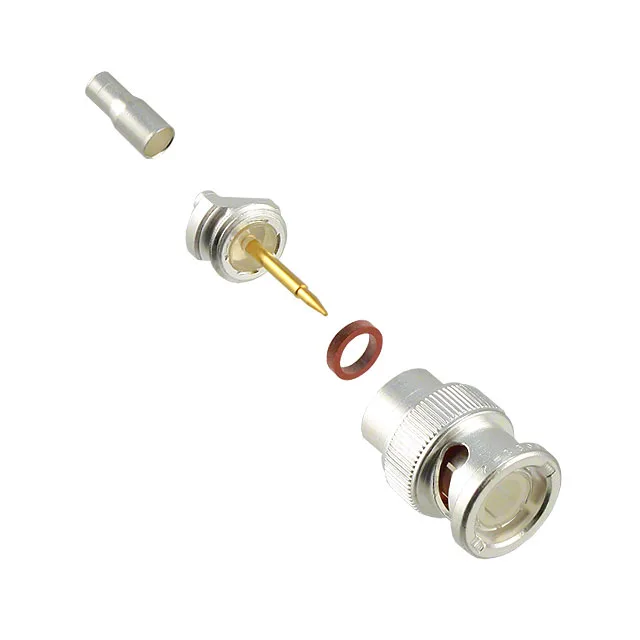
The 50 Ohm impedance and 2.5 GHz frequency rating put it in the general-purpose RF interconnect class, suited for test equipment, instrumentation, and low-power RF signal paths where a reliable, field-replaceable connection is needed.
The 2.5 GHz frequency ceiling means it handles signals up into the low microwave range; for a BNC, that's a solid upper limit, though typical use stays well below that in the VHF/UHF bands. The 500 mating cycles rating tells you the gold-plated center contact and silver-plated brass body will hold up through regular connect/disconnect in a lab or field-test role, but it's not built for thousands of cycles on a production line. The bayonet lock gives positive retention without tools — you'll feel the pin engage and the slot seat. Cable compatibility is specific: RG-174. The crimp ferrule and push-on contact termination are sized for those cable diameters. If you're adapting to a different coax, you'll need a different ferrule or a different connector entirely — the shield crimp and center contact fit are cable-specific.
What Crosses Into the Harness You've Got
If you're maintaining a system that already uses this plug, the critical dimensions to match are the BNC interface (the bayonet lock and male pin geometry are standard), the 50 Ohm impedance, and the cable group. The gold-plated center contact and silver-plated brass body are typical for this class — corrosion resistance is good for indoor and sheltered outdoor use. For a field swap, you'll need the same crimp tool for the shield ferrule and the push-on center contact tool; the gasket in the kit helps seal the cable entry against dust and light moisture.