The 2-644486-7: Mates with standard MTA-100 crimp receptacles (0.100" pitch, single row). The friction lock catches the receptacle latch to resist vibration. Solder pins are 0.140" (3.56mm) long for through-hole board mounting.
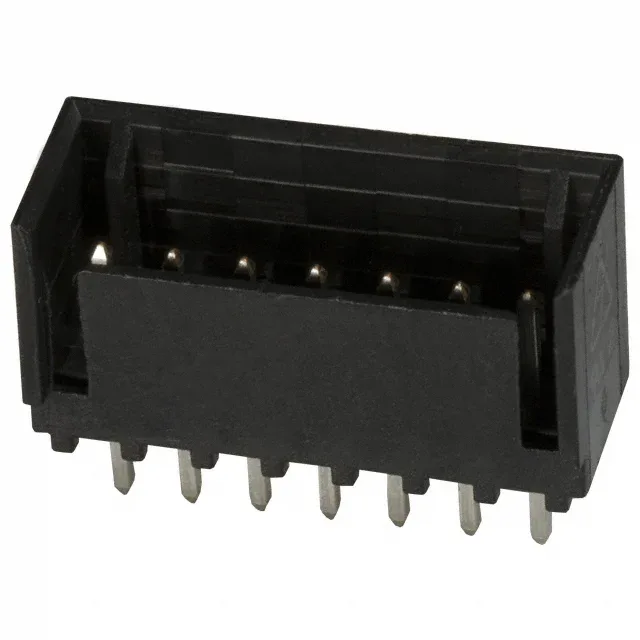
2-644486-7 TE MTA-100 Header 7 Pos 2.54mm Pitch Friction
MPN2-644486-7
Active
TE Connectivity AMP Connectors MTA-100 series, Header, 7 Positions, 0.100" (2.54mm) Pitch, Through Hole, Solder, Shrouded - 4 Wall, Friction Lock, Tin Contact Finish, Black, UL94 V-0, Board Guide, -55°C~105°C, 250VAC, Current Varies by Wire Gauge, Active, RoHS Compliant.
$1.4100Ref. price · indicative, final on quote
RoHSRoHS Compliant
SeriesMTA-100
Source DocumentedChannel stated on listing & quote
Condition PhotosReal unit photos / video on request
WhatsApp AnswersFast human replies for stock & sourcing questions
Worldwide DispatchDHL/FedEx — transit quoted per order
Independent supplier — new & surplus connector stock· Listing updated Aug 2026
Specifications
| Parameter | Value |
|---|---|
| Series | MTA-100 |
| Type | Male Pin |
| Mounting | Through Hole |
| Connector type | Header |
| Fastening type | Friction Lock |
| Voltage rating | 250VAC |
| Current rating | Varies by Wire Gauge |
| Operating temperature | -55°C~105°C |
| Contact material | Copper Alloy |
| Insulation color | Black |
| Insulation height | 0.410\" (10.41mm) |
| Insulation material | Polyester |
All specifications
| Parameter | Value |
|---|---|
| Material flammability rating | UL94 V-0 |
| Style | Board to Cable/Wire |
| Package | Bulk |
| Features | Board Guide |
| Shrouding | Shrouded - 4 Wall |
| Termination | Solder |
| Applications | General Purpose |
| Contact shape | Square |
| Rows | 1 |
| Pitch | 0.100\" (2.54mm) |
| Positions | 7 |
| Contact finish - post | Tin |
| Contact length - post | 0.140\" (3.56mm) |
| Overall contact length | 0.440\" (11.18mm) |
| Contact finish - mating | Tin |
| Contact length - mating | 0.200\" (5.08mm) |
Product details
Frequently asked questions
Does 2-644486-7 have a friction lock feature?
Yes, the header uses a friction lock to secure the mating receptacle, reducing the risk of disconnection under vibration.