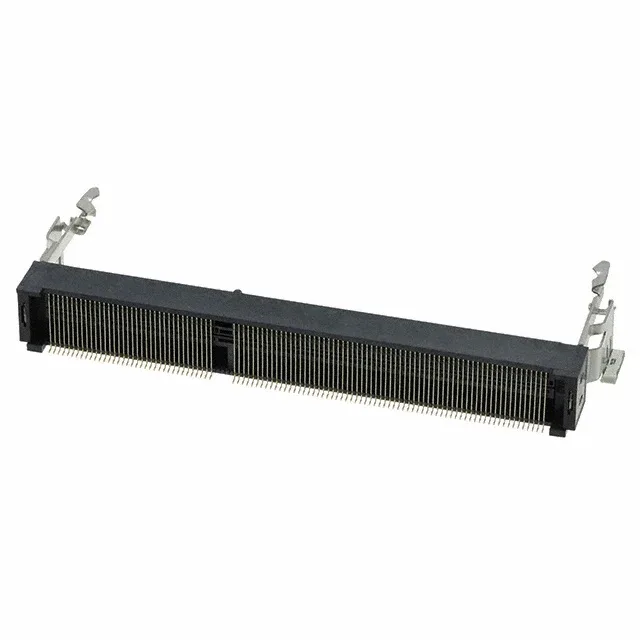
The 2013310-1 is a 204-position DDR3 SODIMM socket from TE Connectivity AMP Connectors, designed for surface-mount assembly on a standard top-mount footprint. It accepts DDR3 SO-DIMM memory modules at a 25° angle, which keeps the module low-profile above the board — useful when the enclosure height is tight. The housing is black with integral board guides and latches. The guides align the module during insertion; the latches lock it in place once fully seated. In a system that sees shipping vibration or fan-induced resonance, those latches matter — without them the module can walk out of the socket over time. Contact finish is gold flash — the thinnest gold layer in the TE plating range. Gold flash is adequate for the typical 50–100 mating cycles a SODIMM sees in its service life (initial assembly, one or two field upgrades). If the application requires frequent module swaps, a thicker gold contact would be a better fit.
Board-fit details for the layout engineer
The socket stands 0.362" (9.20 mm) above the board. The 25° insertion angle means the module tilts before it latches — the clearance envelope above the board needs to accommodate that arc, not just the final seated height. Plan the keep-out zone around the socket accordingly. The card thickness spec is 0.039" (1.00 mm), which matches the JEDEC standard for DDR3 SO-DIMM modules. The contact beams are designed for that thickness — using a thinner or thicker module risks poor contact force or damage to the socket. Surface-mount pads are on the standard DDR3 SODIMM footprint. The gold flash contacts are rated for the signal integrity requirements of DDR3-1066 through DDR3-1600 data rates.
DDR3 vs DDR4 — why this socket is DDR3-specific
This socket is keyed for DDR3 modules only. DDR4 SODIMMs use a 260-position socket with a different keying notch — they will not physically fit into a 204-position DDR3 socket. The 25° insertion angle and the latch position are also specific to the DDR3 module outline.