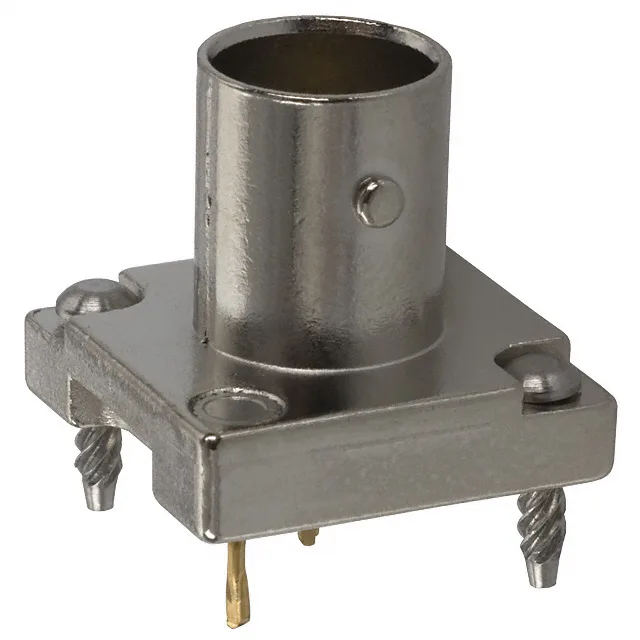
The 221336-3: Most BNC connectors in RF labs are 50 Ohm for test equipment and radio; 75 Ohm BNCs are the standard for video (SDI, CCTV, broadcast), baseband telecom (T1/, DS3), and cable-television distribution. A 75 Ohm jack on a 50 Ohm line creates a 1.5:1 mismatch that reflects signal at higher frequencies, so the impedance choice is non-negotiable for the signal path. This jack is rated to 2 GHz maximum frequency, which covers standard-definition and high-definition video (up to 3G-SDI falls just short, but 1.5G-SDI is fine) and baseband telecom rates.
Press-Fit Termination — No Solder, But Requires a Press
Both the shield and the center contact terminate by press-fit into plated through-holes. That means no soldering — the connector presses into the PCB and the interference fit holds it mechanically and electrically. This is a solderless assembly process, common in high-reliability backplanes or when rework needs to be clean. But press-fit requires a specific insertion tool and a controlled board hole size (the plated-through-hole diameter must match the press-fit pin geometry). If your board is already laid out for a solder-bucket BNC, this won't drop in without a board change.