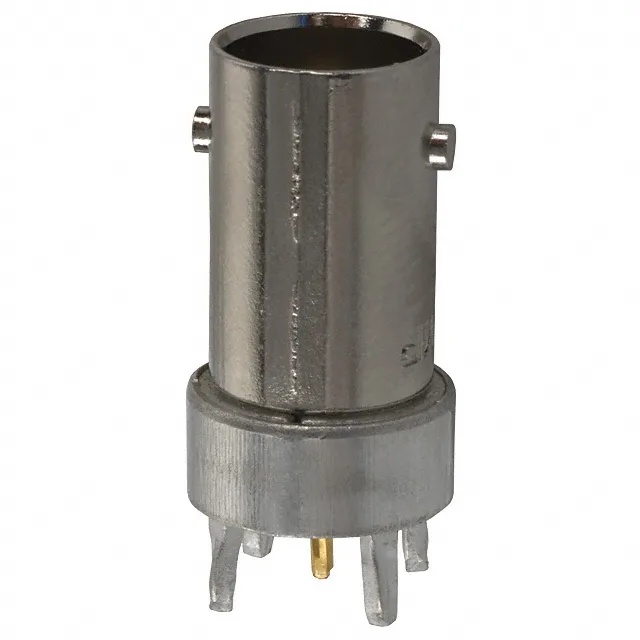
The 222462-1: It's the kind of connector you'd find on the panel end of a video patch bay, a CCTV matrix switcher, or a piece of broadcast test gear — anywhere the signal path is 75 Ohm video or data, not 50 Ohm RF. The 2 GHz bandwidth covers analog composite video, SD-SDI, and most instrumentation signals up to that ceiling. The press-fit shield termination means the outer braid connection is made by pressing the barrel into the PCB plated hole, not by soldering a ground tab — a cleaner assembly step if your board has the right plated through-hole diameter.
If your system runs composite video, SDI, or 75 Ohm data, this is the right interface. The 2 GHz max frequency means it handles 3G-SDI at the upper edge but won't pass 12G-SDI cleanly. The 500 mating cycles are solid for a bayonet-lock connector that gets reconnected periodically — think patch panels or field-test points where the cable gets swapped a few times a week.
Sourcing Reality — Obsolete but Available
That means it's no longer in regular factory production, and there is no official replacement part number on record. For a BOM line that already specifies this exact jack, the channel is surplus inventory and independent distributor stock. If you're designing a new board, look at current 75 Ohm BNC jacks from TE or Amphenol RF that match your PCB footprint and impedance requirement.
The bayonet lock mates with any standard 75 Ohm BNC plug — the twist-and-lock coupling is universal across the BNC interface. No solder on the shield side, which saves a step in assembly, but the PCB hole diameter and plating thickness need to match the press-fit barrel dimensions from the product drawing. The nickel-plated zinc body and silver housing are standard for indoor equipment — no IP rating, so keep it inside the enclosure.