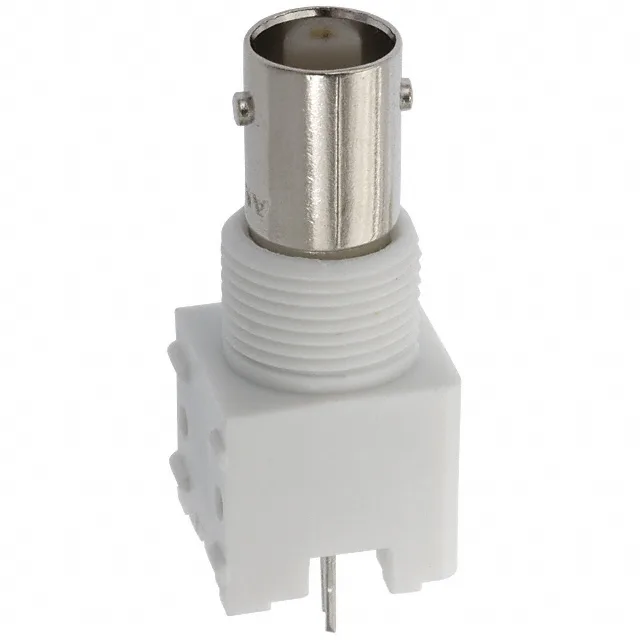
It's a panel-mount bulkhead connector with a bayonet lock — the fast mate/unmate you expect from BNC, with a front-side nut that secures it through the panel. The gold-plated phosphor bronze centre contact handles the signal path, and the zinc body gets a nickel finish. Dielectric is polymethylpentene (PMP).
The 500 mating cycles is typical for BNC; the bayonet lock wears the coupling mechanism over repeated connects, but 500 cycles covers years of field service in a fixed installation. The gold centre contact matters here: it keeps contact resistance stable across those cycles, especially in environments where corrosion could creep in. The -55°C to 85°C range covers most indoor and sheltered outdoor gear, but not extended high-temp or engine-bay duty.
What's in the Box and How It Mounts
The package includes three pieces: the connector body, a lockwasher, and a nut. It's a bulkhead mount with front-side nut retention — you drop it through the panel from the outside, the lockwasher sits behind the panel, and the nut tightens from the inside. The shield termination is solder, same as the centre contact. That means you solder the braid and centre conductor directly, not crimp. It's a field-repairable joint if you have an iron, but takes more time than a crimp BNC.
The 226993-3 carries an Isolated feature designation, which typically means the shell or mounting is electrically isolated from the signal path — useful in applications where you need to break ground loops or isolate the shield from chassis ground. The natural and silver housing colour is standard for nickel-plated zinc BNC connectors.