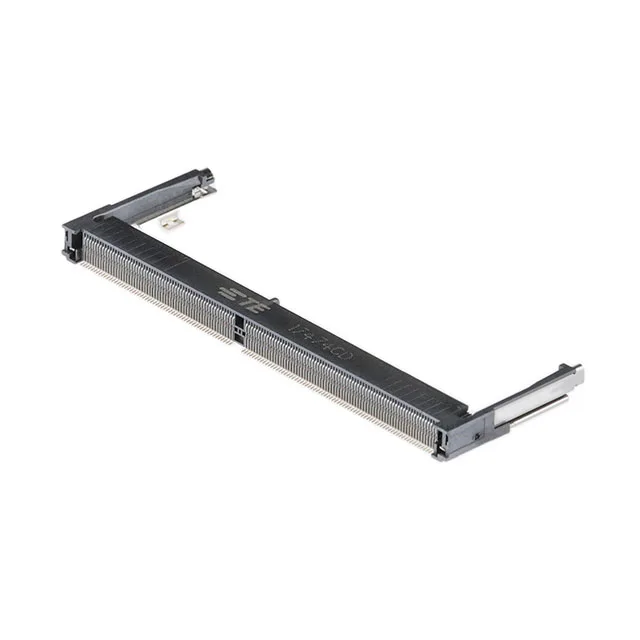
260-position DDR4 SODIMM with a 25° insertion angle
The 2309410-1: This is a 260-position SODIMM connector from TE's AdvancedMC series, designed specifically for DDR4 SDRAM modules. The 25° angle insertion means the memory module sits at a shallow angle relative to the board — a common layout in compact blade servers and telecom line cards where the z-height above the PCB is tight. That flips the keep-out zone and can simplify routing when the memory is on the bottom side of the board. Budget that into your enclosure clearance before you lock the board stack.
Gold flash contacts and surface mount termination
Contact finish is gold flash over the base metal. Gold flash gives enough corrosion resistance for the typical mating cycle count of a memory socket — think 50 to 100 insertions over the product life. If you need 500+ cycles, you'd step up to a thicker gold plate, but for a SODIMM that gets seated once at build and maybe swapped during field upgrade, flash is the standard call. The package is Tape & Reel or Cut Tape, so it feeds into a pick-and-place line without a tooling change. The housing includes a board guide and latches. The board guide aligns the module during insertion so the contacts don't get bent; the latches hold the module against vibration once it's seated. In a server chassis with cooling fans running, those latches keep the memory from backing out over time.