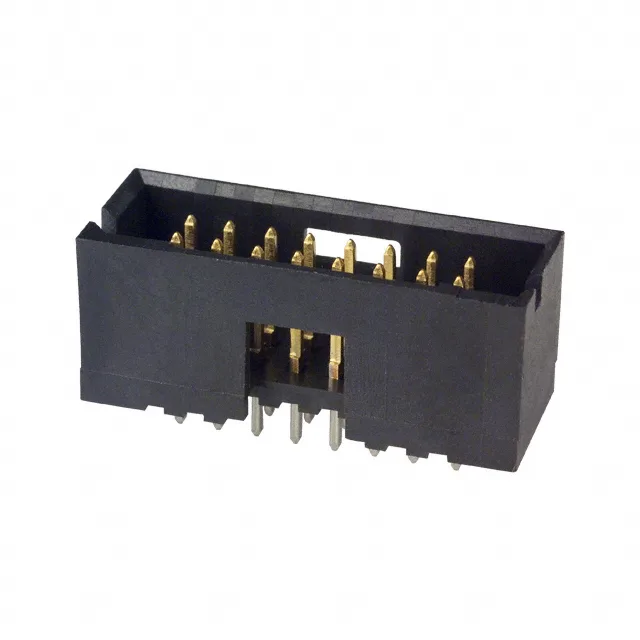
TE Connectivity AMP Connectors 5-102619-6 — Pin Headers

5-102619-6 TE Connectivity AMPMODU Mod II Header, 16 Pos

MPN5-102619-6
Active

TE Connectivity AMP Connectors AMPMODU Mod II, Header, Board to Board or Cable, 16 Positions, 2.54 mm Pitch, Through Hole, Shrouded - 4 Wall, Gold Mating, Detent Lock

$4.6500Ref. price · indicative, final on quote
RoHSROHS3 Compliant
SeriesAMPMODU Mod II
Source DocumentedChannel stated on listing & quote
Condition PhotosReal unit photos / video on request
WhatsApp AnswersFast human replies for stock & sourcing questions
Worldwide DispatchDHL/FedEx — transit quoted per order
Independent supplier — new & surplus connector stock· Listing updated Aug 2026

Specifications

5-102619-6 key specifications
ParameterValue
SeriesAMPMODU Mod II
TypeMale Pin
MountingThrough Hole
Connector typeHeader
Fastening typeDetent Lock
Current rating3A
Operating temperature-65°C ~ 105°C
Contact materialPhosphor Bronze
Insulation colorBlack
Insulation height0.440\" (11.18mm)
Insulation materialThermoplastic
Material flammability ratingUL94 V-0

All specifications

5-102619-6 additional specifications
ParameterValue
StyleBoard to Board or Cable
PackageTray
ShroudingShrouded - 4 Wall
TerminationSolder
Contact shapeSquare
Rows2
Pitch0.100\" (2.54mm)
Positions16
Row spacing - mating0.100\" (2.54mm)
Contact finish - postTin
Contact length - post0.125\" (3.18mm)
Overall contact length0.533\" (13.55mm)
Contact finish - matingGold
Contact length - mating0.318\" (8.08mm)
Contact finish thickness - post100.0µin (2.54µm)
Contact finish thickness - mating15.0µin (0.38µm)

Product details

The 5-102619-6: This is a 16-position, dual-row, 2.54 mm pitch header from the AMPMODU Mod II series. The pitch and row spacing match the standard 0.100-inch grid, so the footprint lines up with common ribbon cable IDC connectors and board-to-board receptacles. All 16 positions are loaded — no empty spots to trip up a harness builder.

The mating contact finish is gold at 15.0 µin thickness. Gold on the mating interface resists oxidation and maintains stable contact resistance through repeated mate/unmate cycles — a common requirement in field-serviceable assemblies or test fixtures.