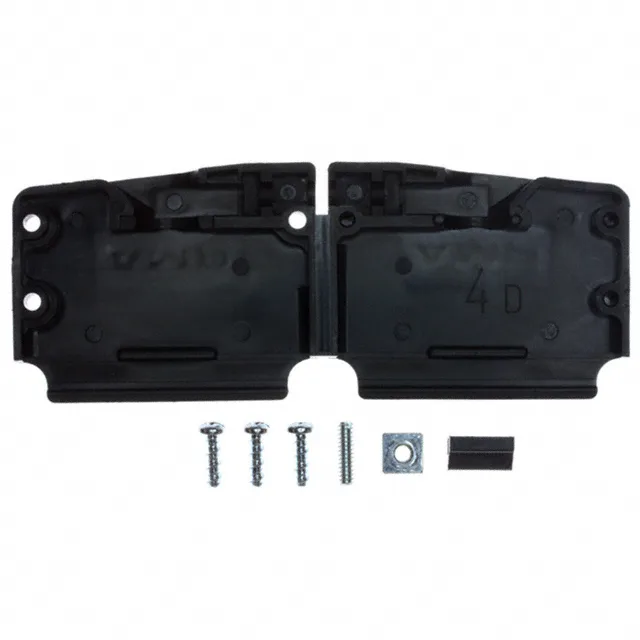
Hinged Backshell for AMPLIMITE HD-20, 37-Position Shell Size C
The TE Connectivity 5205731-1 is a hinged backshell from the AMPLIMITE HD-20 series, designed to terminate and shield the cable end of a 37-position D-sub connector using shell size C. Its key feature is the dual cable exit — 45° and 180° — giving the harness builder a choice in how the round cable leaves the connector body. The black polypropylene (PP) construction keeps weight low and provides the UL-rated flame resistance expected inside equipment enclosures. This is the accessory that finishes a D-sub cable assembly: it clamps over the cable jacket, captures the strain relief, and the hinged lid closes over the solder bucket or crimp termination area. Assembly hardware is included in the package, so no separate screw or clamp order is needed for a typical build.
Cable Exit and Strain Relief
The dual cable exit angles — 45° and 180° — let the harness designer route the cable in the direction that fits the enclosure. The 180° exit sends the cable straight out the back; the 45° exit angles it to the side, useful when the connector sits close to a panel wall or another component. The backshell accepts round cable, and the included strain relief grips the jacket to keep tension off the solder or crimp joints inside.
This backshell fits D-sub connectors with 37 positions and shell size C, and it also works with the high-density 62-position D-sub that shares the same shell size. That means one backshell part number covers two common connector variants on the same shell footprint — useful when a BOM mixes standard-density and high-density D-subs in the same panel cutout. The closest sibling in the AMPLIMITE HD-20 family is the 7-1437064-0, which ships in a tube rather than bulk and carries the same active lifecycle status. The functional difference is packaging — the parts are otherwise interchangeable for form, fit, and function. The 828277-6 is another active alternative, bagged instead of bulk. For a BOM line, any of the three will work; the choice comes down to the packaging volume the assembly line prefers.