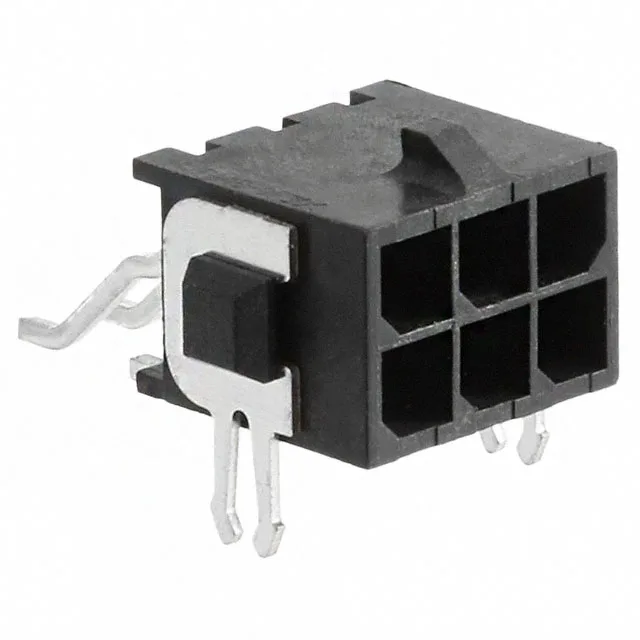
Board Lock and SMT Termination — What That Means on the Line
The board lock feature gives the header a mechanical anchor to the PCB during solder reflow. Without it, the part can float or tilt as the paste melts, especially on a right-angle part where the cable strain pulls asymmetrically. The lock holds the header flat against the board until the solder joints solidify. Termination is SMT solder — no through-hole, no press-fit. If your line runs lead-free only, confirm compatibility with the solder alloy and profile; the tin-lead finish may require a flux adjustment.
Plating and Temperature — Field-Service Reality Check
This is a thick, durable finish — not a flash. In a connector that sees occasional unmate/remate during field service, that thickness resists wear-through better than a thin tin flash. Mating cycles are not specified in the record, but the plating depth supports hundreds of cycles before the base brass shows through. That covers most indoor and under-hood automotive environments, but not continuous engine-bay heat above 105°C.
Obsolete — How to Source This Part Now
Sourcing is through independent surplus and aftermarket inventory. If you need a drop-in replacement, the closest functional match is another Micro MATE-N-LOK header with the same 6-position, 3.00 mm pitch, right-angle SMT, and board lock — but the exact pinout and keying may differ. Verify the mating receptacle part number before committing. A board spin may be required if no exact pin-compatible alternative exists.