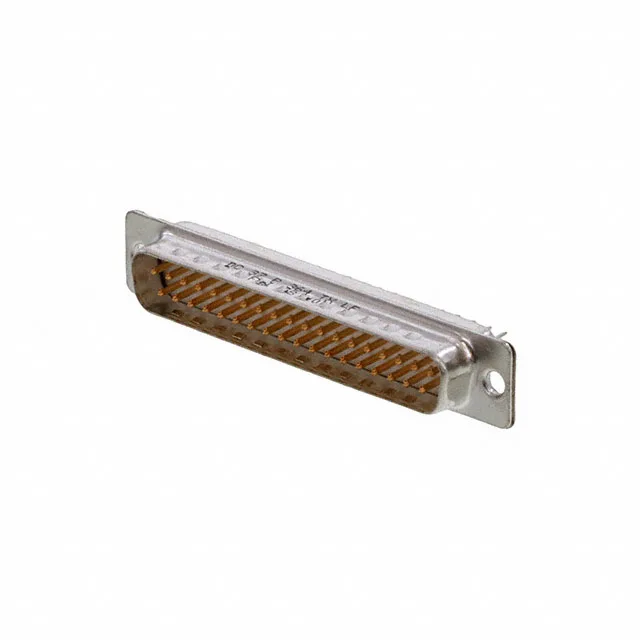
The Amphenol FCI DC37P364TXLF is a 37-position D-Sub plug with male pins, part of the D series. It uses the DC shell size — the largest standard-density layout for a single D-sub — so all 37 contacts are packed into the familiar trapezoidal shell. The through-hole solder termination and vertical orientation make it a straight-in board-mount plug for a PCB edge or mid-board location.
5 A per Contact — What That Means in a 37-Pin Field
The per-contact current is not the limit in practice — the real constraint is the temperature rise across the full 37-pin field. With all contacts loaded near the rating, the combined I²R heat in the dense pin arrangement will derate the connector below the 5 A per-contact ceiling. For a harness designer, this means the DC37P364TXLF is a signal interconnect, not a power bus. The 300 V rating gives enough headroom for typical industrial control voltages (24 V, 48 V, 120 V) without creeping up on the dielectric limit.
Gold GXT Flash Plating — Mating Cycle Reality
The contacts carry gold, GXT™ flash plating over copper alloy. Flash thickness is a thin deposit — the GXT™ is a hard gold alloy that improves wear resistance over soft gold.
Grounding Indents and Shell Finish
The steel shell is tin-plated, and the grounding indents are a factory-formed feature that presses into the receptacle shell when mated. This creates a low-impedance path from the cable shield or panel ground through the connector shell, bypassing the signal pins. For a board layout engineer, this means the PCB footprint should include a ground plane connection to the shell solder tabs — the standard D-sub footprint with four through-hole shell anchors handles it.
The DC37P064TXLF is the same 37-position DC-shell plug, same 5 A and 300 V ratings, but it uses a solder cup termination for free-hanging (in-line) cable mounting instead of the through-hole solder tails on the DC37P364TXLF. The choice between the two is purely board-mount vs cable-mount: the DC37P364TXLF goes into a PCB; the DC37P064TXLF terminates a cable harness with a solder cup and strain relief. Same shell, same contact count, same grounding indents — different termination style for different assembly methods.