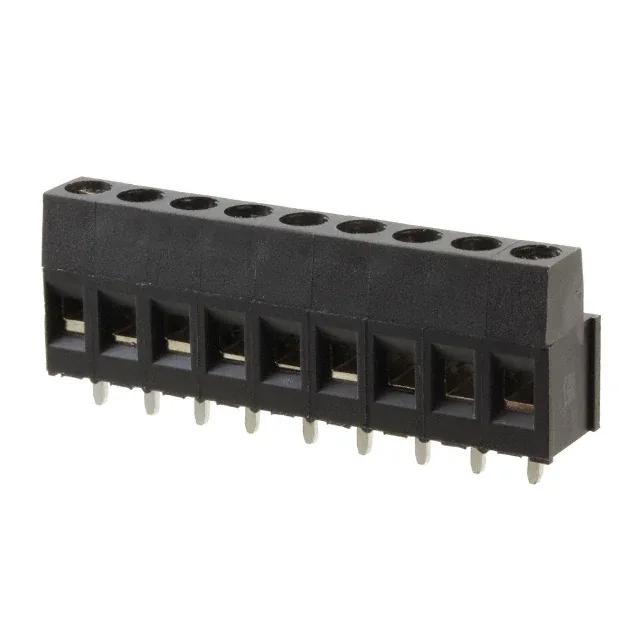
9 Positions, 5.00 mm Pitch, Screw Rising Cage Clamp — the 300 V Power Rail Block
The black PA66 housing carries the interlocking side feature, meaning multiple blocks can be ganged side-by-side on the same DIN rail or panel to build up the exact circuit count without a custom PCB layout — a common trick when the BOM calls for a 9-position block but the panel needs 18 or 27 terminations in a single row.
Wire Range and Termination — What the 12-30 AWG and 0.79 Nm Mean on the Bench
The 12-30 AWG acceptance range is wider than most screw-clamp blocks in this pitch class — 12 AWG carries the full 17.5 A without derating, while 30 AWG lets you land signal-level thermocouple or control wiring in the same block. The rising cage clamp doesn't wrap the screw thread around the conductor; the clamp plate rises vertically, so stranded wire doesn't birdcage under the screw head the way a traditional binding-head screw can. The M3 brass screw, nickel-plated, has a specified torque of 0.79 Nm (7.0 Lb-In) — that's the sweet spot between crushing a 30 AWG solid and leaving a 12 AWG stranded loose enough to pull out under vibration.
Through-Hole Mount, Horizontal Wire Entry — Board Layout Note
This is the right choice when the enclosure height is tight above the board and the wiring exits toward a panel edge or cable duct. The 5.00 mm pitch on a 9-position block gives a 45 mm body length (9 × 5.00 mm), which eats board space but keeps the routing wide enough that a 12 AWG power feed doesn't need a tight bend radius into the clamp.