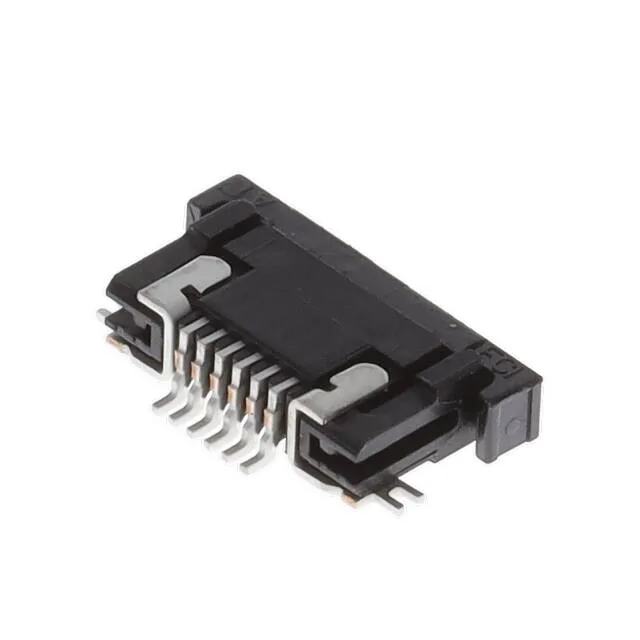
6-Position ZIF FPC Connector for Signal-Density Board Edges
The SFV6R-1STE9HLF is a 6-position FFC/FPC connector from the SFV-R series, built for low-profile board-edge signal routing. The 0.50 mm pitch sets a tight footprint — expect a 3 mm wide land pattern for the six contacts, which keeps routing density high on a multi-layer board. The ZIF (zero insertion force) slide-lock actuator lets you insert the FPC without stressing the pads, then locks it in place. The slide lock is a positive latch — it won't back out under vibration the way a friction-fit actuator can. The 0.5 A ceiling is typical for 0.50 mm pitch — the narrow contact beam limits current more than the tin plating does. The temperature range covers outdoor telecom cabinets and automotive cabin electronics, but the 105°C top end keeps it out of the engine bay.
Tin Contacts and 20 Mating Cycles — Designed for One-Time Fit
That is a field-service limit, not a bench-test connector — once the FPC is inserted and locked, plan to leave it. For applications needing more reconnect duty, the SFV6R-1STBE1HLF (gold-plated contacts, flip-lock actuator) supports a higher cycle life — the gold plating resists fretting corrosion through repeated insertions.
The housing is black polyamide (PA) with glass fill, halogen-free, rated UL94 V-0. The actuator is black PPS, also glass-filled and halogen-free. Both materials are stable through lead-free reflow profiles.
Peer Cross-Shop: Tin vs Gold, Slide Lock vs Flip Lock
The closest peer is the SFV6R-1STE1HLF — identical tin-plated contacts, slide lock, and 20 mating cycles. The only difference is the cable end type: the -1STE1HLF accepts tapered cable ends only, while the -1STE9HLF accepts both straight and tapered. If you need more mating cycles, the SFV6R-1STBE1HLF upgrades to gold-plated contacts and a flip-lock actuator. Gold plating typically supports 50+ cycles; the flip lock gives a different actuation feel. The trade-off is higher per-unit cost. The SFV6R-3STE1HLF is another tin-plated variant with the same slide lock, but it accepts only FPC (not FFC) cable end types. For FFC applications, stick with the -1STE9HLF.