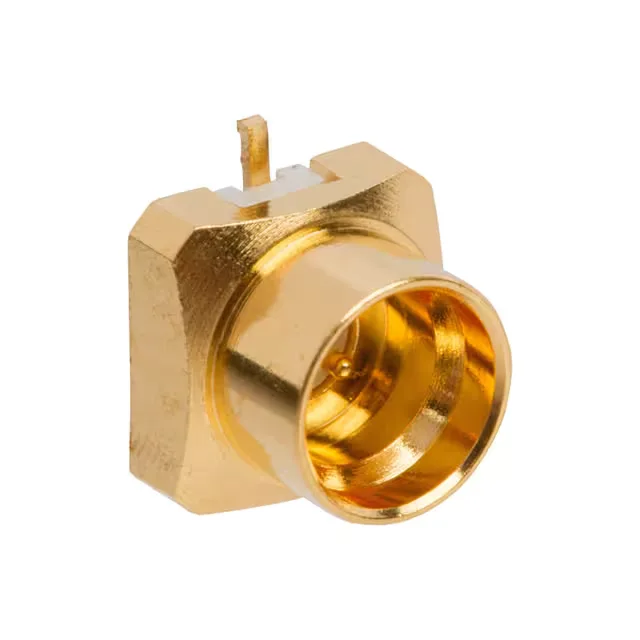
The SMP-MSLD-PCS20T: It carries a controlled 50 Ohm impedance and uses a snap-on fastening system with limited detent — meaning the axial retention is moderate, not the high-hold full detent you'd spec for a vibration-locked panel mount. The limited detent is the better choice for blind-mate board-to-board or cable-to-board links where you want a positive but not excessive engagement force, and where the connector may need to be unmated without tools. The gold body and gold-plated center contact (brass center contact material) keep the signal path corrosion-resistant through repeated connects. Rated for 500 mating cycles, it holds up in test-fixture or field-service duty where reconnection happens regularly.
20 GHz Bandwidth and 50 Ohm Line — What That Means on the Board
The 20 GHz max frequency and 50 Ohm impedance together define the usable RF envelope. At 20 GHz the connector's VSWR and insertion loss stay within SMP-class limits — this is not a general-purpose DC connector; it's built for microwave signal paths where the impedance match at the transition matters. The surface mount termination (SMT) means the connector solders directly to the board footprint without through-holes, which keeps the ground plane continuous under the launch and avoids the stub inductance a plated through-hole would add at higher frequencies.
Limited Detent vs. Full Detent — Choosing the Right Retention
The SMP-MSLD-PCS20T uses limited detent, which gives a lower axial retention force than a full-detent SMP connector. The trade-off is lower vibration resistance compared to full detent.