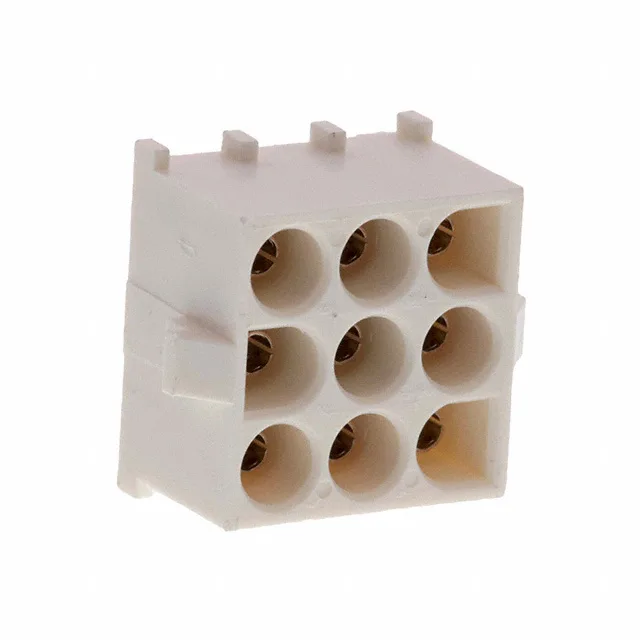
TE Connectivity AMP Connectors 1969817-1 — Pin Headers

1969817-1 TE Connectivity Universal MATE-N-LOK Header, 9 Pos

MPN1969817-1
Active

TE Connectivity AMP Connectors Universal MATE-N-LOK header, 1969817-1, board-to-cable/wire, 9 positions, 0.250" (6.35 mm) pitch, 3 rows, shrouded - 4 wall, locking ramp, through-hole solder, tin-plated male pins, UL94 V-0 natural nylon.

$0.7000Ref. price · indicative, final on quote
RoHSRoHS Compliant
SeriesUniversal MATE-N-LOK
Sourced new & surplus through independent channelsAuthenticity-screened · ESD-safe packingListing updated Aug 2026

Specifications

1969817-1 key specifications
ParameterValue
SeriesUniversal MATE-N-LOK
TypeMale Pin
MountingThrough Hole
Connector typeHeader
Fastening typeLocking Ramp
Contact materialPhosphor Bronze
Insulation colorNatural
Insulation height0.550\" (13.97mm)
Insulation materialPolyamide (PA), Nylon
Material flammability ratingUL94 V-0
StyleBoard to Cable/Wire
PackageBulk

All specifications

1969817-1 additional specifications
ParameterValue
ShroudingShrouded - 4 Wall
TerminationSolder
ApplicationsGeneral Purpose
Contact shapeCircular
Rows3
Pitch0.250\" (6.35mm)
Positions9
Row spacing - mating0.250\" (6.35mm)
Contact finish - postTin
Contact length - post0.185\" (4.70mm)
Contact finish - matingTin

Product details

9-position, 3-row, 6.35 mm pitch header with locking ramp

The 1969817-1 is a 9-position, 3-row header from the TE Universal MATE-N-LOK series, on a 0.250" (6.35 mm) pitch.

Tin-plated contacts for cost-sensitive signal duty

Tin contact finish is standard for Universal MATE-N-LOK headers in non-corrosive indoor environments.

Frequently asked questions

What is the pitch and position count of 1969817-1?

The pitch is 0.250" (6.35 mm) and the header has 9 positions in 3 rows.

Is 1969817-1 RoHS compliant?

Yes, it is RoHS compliant.

What does the locking ramp do on this header?

The locking ramp engages with the latch on the mating Universal MATE-N-LOK receptacle housing, providing a positive lock that resists vibration-induced disconnection.